Ganvexa Consulting

Most small and mid-sized manufacturers don't run out of materials because nobody cares. They run out because stock is counted, not tracked. Someone checks the shelf when they remember to, orders when it looks low, and hopes the next big job doesn't need more than what's there.
That works when you're small. It stops working once you have more jobs running at the same time than one person can keep in their head.
The real reasons shortages show up late
- Stock on the shelf isn't the same as stock available. Ten sheets on the rack might already be promised to three jobs that haven't started yet.
- Orders confirm faster than purchasing hears about them. Sales confirms a big job on Monday. Purchasing finds out on Thursday when the workshop asks for material.
- Supplier lead times aren't written down anywhere. Everyone knows one supplier takes "about two weeks". Nobody knows it's actually closer to four in busy months.
- Materials are used without being recorded. Offcuts, rework and "borrowing" for urgent repairs quietly drain stock that the system still thinks is there.
What good looks like
A simple test: when a job is confirmed, can anyone tell you, within a minute, whether you have everything needed to build it? If the answer means walking to the store, that's the gap.
In Odoo, a few standard features cover most of it:
Component availability on every job
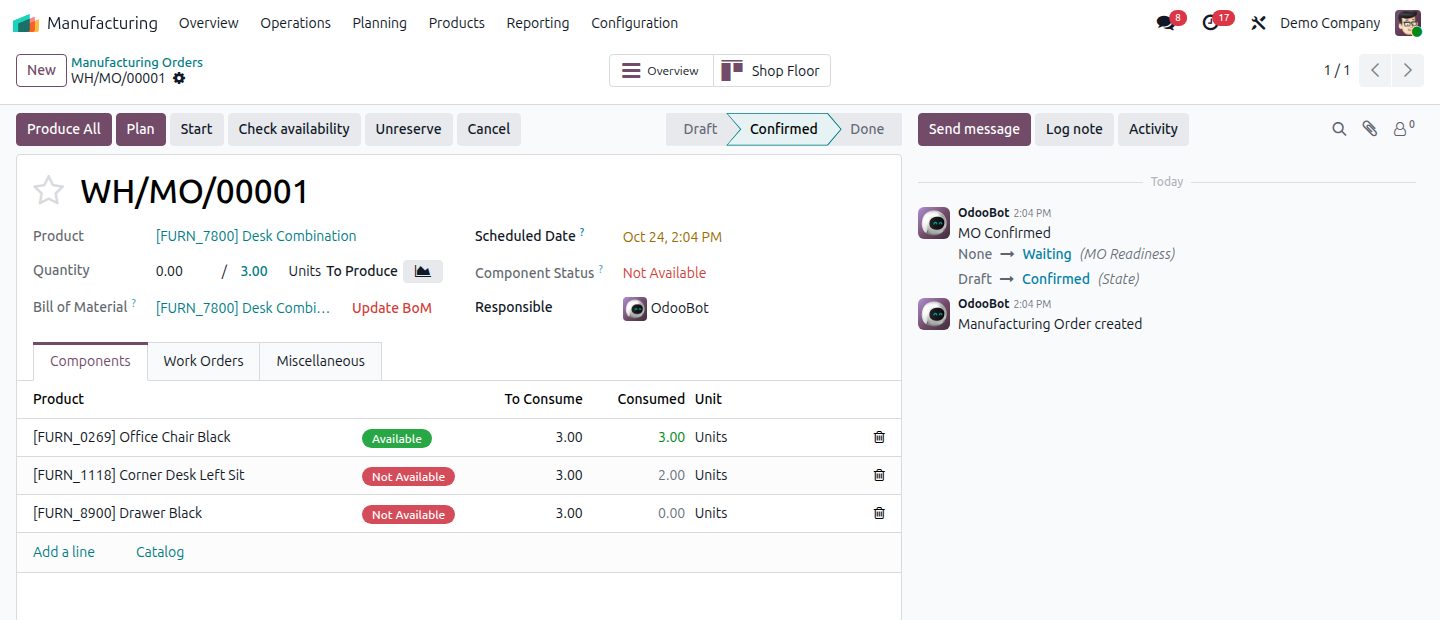
Each manufacturing order shows its components and whether each one is available, partly available or missing. You see the problem when the job is planned, not when it's half built.
Reordering rules for the materials that matter
For the materials you use constantly (tube, sheet, fasteners, fin stock, timber, whatever runs your workshop), you set a minimum and a maximum. When available stock drops below the minimum, Odoo suggests or creates a purchase request for the right quantity. Including supplier lead times means it suggests it early enough.
Purchasing driven by actual jobs
For special materials that you only buy for a specific order, Odoo can create the purchase request straight from the confirmed job ("make to order"). Purchasing sees exactly what's needed and for which customer.
Consumption recorded where it happens
When the workshop records what was actually used on each job, including scrap, the stock figure stays honest. This is a process habit more than a software feature, and it's the part that most often needs attention in training.
Adding a simple AI layer
Once the data is reliable, a small amount of automation goes a long way. One thing we often set up is a short morning summary sent to the production manager and purchasing:
- Jobs starting this week that are missing materials
- Purchase orders that are late from suppliers
- Materials below their minimum level
It's written in plain language, a few lines long, and it means problems get handled before the morning meeting instead of during it. AI can also read supplier emails about delays and flag which jobs are affected, so nobody has to connect the dots by hand.
Where to start
- List the 20 to 30 materials that cause most of your stoppages.
- Do a proper count of those, and only those, and get them right in Odoo.
- Set reordering rules with realistic supplier lead times.
- Agree with the workshop how materials are booked out to jobs.
You don't need perfect stock on every item. You need reliable stock on the items that stop production.
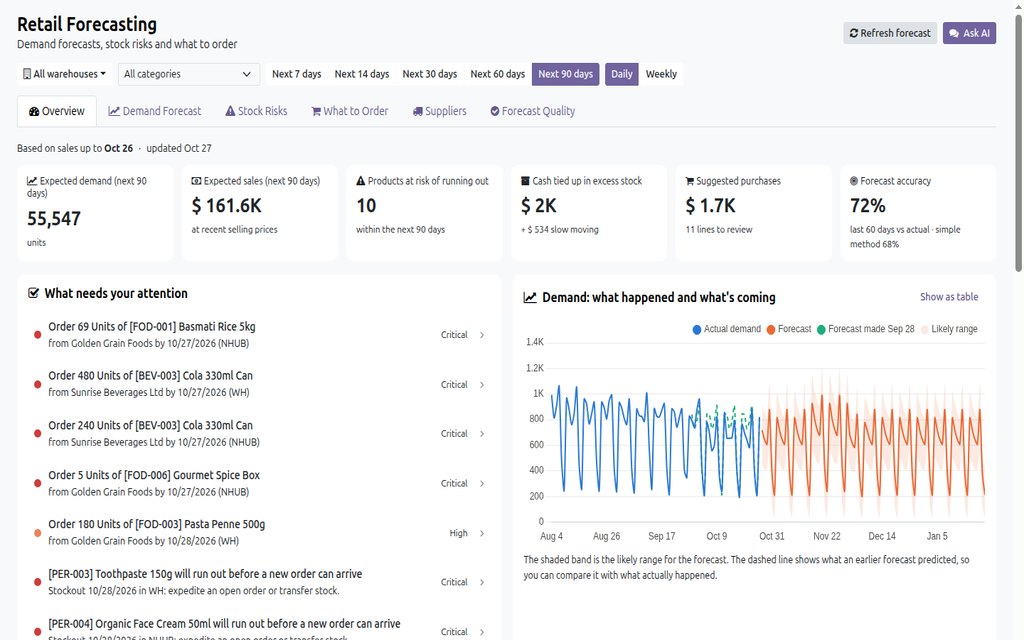
If Odoo is already live but nobody trusts the stock figures, this is usually where our Odoo support and optimization work starts. If you're still quoting from spreadsheets, read how made-to-order manufacturers structure quotes in Odoo. For bought-in stock items, AI demand forecasting in Odoo shows what will run out and when to reorder.
Common questions
How does Odoo show material shortages before production starts?
Each manufacturing order lists its components and marks them as available, partly available or not available, based on stock and other reservations. Planners see the gap as soon as the order is confirmed.
What are reordering rules in Odoo?
A minimum and maximum quantity per product and warehouse. When forecast stock drops below the minimum, Odoo suggests or creates a purchase (or production) order for the right quantity, taking supplier lead time into account.
Can AI help with material planning in manufacturing?
Yes, as an assistant. Odoo works out what each job needs and what is short. AI turns that into a short daily summary of missing materials, late suppliers and jobs at risk, so the team acts before the morning meeting. Ordering decisions stay with your people.
Why doesn't our stock in Odoo match the shelf?
Usually because materials are used without being recorded, such as scrap, rework or urgent repairs, or because units of measure are set up incorrectly. It's mostly a process fix, backed by the right configuration.
material shortagesOdoo MRPmaterial requirements planningcomponent availabilityOdoo reordering rulesproduction planningAI production planninginventory management for manufacturers